Winter's Hidden Hazard: When Your Humidifier Becomes a Source of Indoor Contamination
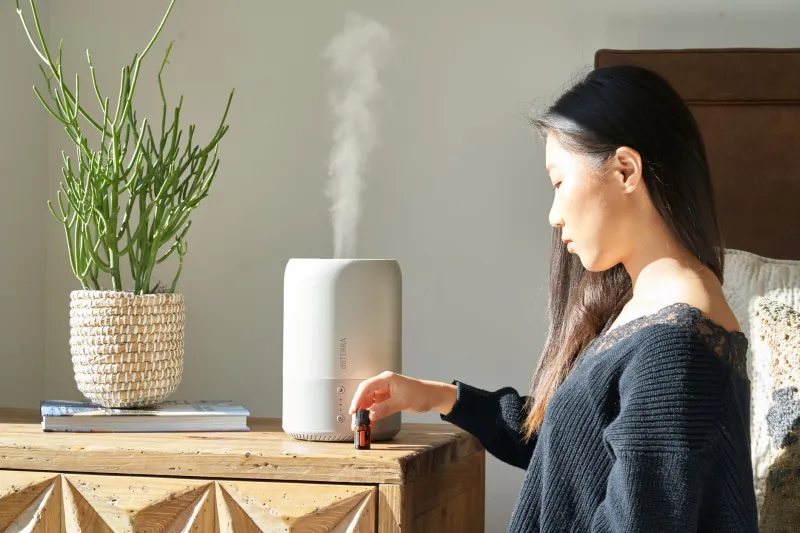
Winter in most of the United States brings a predictable indoor comfort problem. Forced-air heating systems, whether gas furnaces or electric heat pumps, circulate warm air that holds substantially less moisture than the outdoor air it replaced. Relative humidity in heated homes can drop to 20 percent or lower — well below the 30 to 50 percent range that the EPA identifies as optimal for indoor health. Dry sinuses, irritated skin, static electricity, and a persistent sense of physical discomfort follow.
The humidifier market responds to this seasonal reality with enthusiasm. Walk through any pharmacy or big-box retailer between October and March and you will find prominent displays of cool-mist ultrasonic units, warm-mist steam humidifiers, evaporative models, and combination air treatment devices. Sales spike predictably with the first heating season cold snap. Parents place them in children's bedrooms. Wellness-minded adults set them beside their nightstands. The devices are sold as straightforward comfort tools.
The oversight that most product packaging does not address: the quality of the water you put in the reservoir determines the quality of the air that comes out the other side.
What Tap Water Carries Into the Air
Municipal tap water in the United States is treated to meet Safe Drinking Water Act standards — standards designed for ingestion, not aerosolization. When water is converted into a fine mist or vapor and dispersed into room air, the delivery mechanism changes, and so does the exposure route for everything dissolved or suspended within it.
Minerals are the most immediately visible concern. Calcium and magnesium — the compounds responsible for water "hardness" — do not evaporate. When an ultrasonic humidifier converts water into microscopic droplets and disperses them into the air, the mineral content travels with those droplets. As the water component evaporates, minerals are left behind as fine white particulate matter — what many humidifier users notice as a chalky dust settling on nearby surfaces.
This mineral dust is not merely a housekeeping annoyance. Research examining ultrasonic humidifier emissions has found that the particulates generated from hard tap water fall within the respirable size range — small enough to be inhaled deeply into the lungs. A 2020 study published in Environmental Science & Technology found that ultrasonic humidifiers using tap water could generate indoor particulate matter concentrations exceeding outdoor air quality standards, with the aerosol composition reflecting the mineral and chemical content of the source water.
For households in regions with high water hardness — which includes much of the Midwest, Southwest, and Mountain West — this is a meaningful and largely unrecognized exposure pathway.
The Pathogen Problem: Biofilm and Reservoir Contamination
Minerals are only the beginning. Standing water at room temperature is a hospitable environment for microbial growth, and humidifier reservoirs — particularly those that are not emptied and dried between uses — can develop biofilm within 48 hours under the right conditions.
Biofilm is a structured community of microorganisms embedded in a self-produced matrix that adheres to surfaces. In a humidifier reservoir, biofilm can harbor bacteria including Legionella pneumophila, the organism responsible for Legionnaires' disease, as well as Pseudomonas aeruginosa and various mold species. When the humidifier operates, it aerosolizes not only water but the microbial content of that water — dispersing it directly into the breathing zone of sleeping occupants.
The CDC has documented humidifier-associated respiratory illness outbreaks in institutional settings, and case reports of home humidifier-related lung disease — a condition historically called "humidifier lung" or hypersensitivity pneumonitis — appear in the clinical literature with regularity. The risk is not theoretical; it is documented, repeatable, and preventable.
Chlorine, present in municipal water as a disinfectant, provides some protection against microbial growth in fresh tap water. However, chlorine is volatile — it off-gasses from standing water within hours, particularly in warm environments. A reservoir filled Monday evening and still operating Thursday morning may have lost most of its chlorine content, leaving the water unprotected against bacterial colonization.
Cool Mist Versus Warm Mist: Does the Technology Matter?
A common assumption is that warm-mist or steam humidifiers are safer than ultrasonic cool-mist units because the heating process kills pathogens. This is partially accurate — the boiling or near-boiling temperatures used in steam humidifiers do reduce bacterial viability in the water before it is emitted. However, the mineral content issue applies equally to steam units, as dissolved solids are left behind in the heating chamber and can accumulate into scale deposits that themselves become sites for microbial growth over time.
Ultrasonic cool-mist units, which use high-frequency vibration rather than heat, aerosolize water and all of its contents without any thermal treatment. They are energy-efficient and quiet — qualities that have made them popular for bedroom use — but they are also the category most directly implicated in mineral particulate generation and pathogen dispersal when used with unfiltered tap water.
Evaporative humidifiers, which pass air through a wet wick or filter, offer a natural mineral-limiting mechanism: the wick traps minerals while water evaporates. However, the wick itself becomes a site of mineral accumulation and potential microbial growth if not replaced on schedule.
Practical Steps for Safer Winter Humidification
The goal is not to discourage humidifier use — maintaining appropriate indoor humidity genuinely supports respiratory comfort, reduces the viability of airborne influenza virus, and protects wood furnishings and flooring. The goal is to use these devices in ways that do not introduce new problems while solving the moisture deficit.
The most impactful single change is the water source. Distilled water eliminates the mineral content that drives particulate generation and removes the dissolved solids that support biofilm formation. It is available inexpensively at virtually every grocery store in the United States and represents a straightforward swap that meaningfully alters the risk profile of humidifier use. For households with reverse osmosis filtration systems, RO-treated water provides similar benefits.
Reservoir hygiene is equally important. The EPA recommends emptying, rinsing, and drying humidifier reservoirs every one to three days during active use — a guideline that most owners do not follow consistently. Weekly disinfection with a dilute hydrogen peroxide solution, followed by thorough rinsing, can interrupt biofilm development before it becomes established.
Filter and wick replacement schedules should be treated as firm deadlines rather than suggestions. A wick operating past its service life is not neutral — it is actively harboring the conditions that make it a contamination source.
Finally, placement matters. Humidifiers positioned directly beside sleeping occupants maximize exposure to whatever the device is emitting. Positioning units several feet away allows for some dilution and dispersion before the aerosol reaches the breathing zone.
Winter wellness depends on the quality of what circulates through your home — and that equation includes what you add to the air, not only what you filter from it.