The Moisture Middle Ground: How Indoor Humidity Levels Either Fortify or Undermine Your Immune Defenses
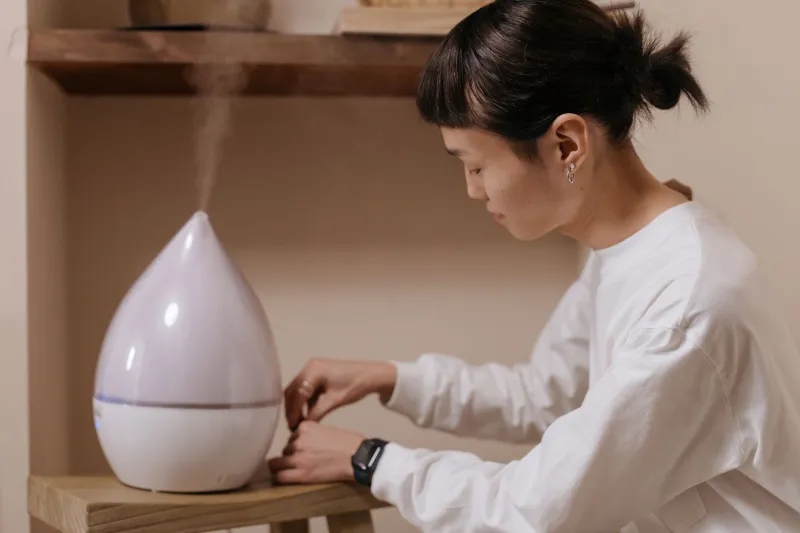
When most people think about improving the air inside their homes, they consider dust, allergens, or chemical off-gassing. Rarely does moisture enter the conversation — and yet relative humidity may be one of the most consequential variables governing the quality of the air you breathe each day. Too much of it, and your home becomes a breeding ground for biological threats. Too little, and the body's first line of respiratory defense begins to break down. The science on this is both clear and, for most households, largely unaddressed.
What Relative Humidity Actually Means for Your Home
Relative humidity (RH) is the percentage of water vapor present in the air relative to the maximum amount the air could hold at a given temperature. In a typical American home, this figure shifts constantly — influenced by outdoor weather, cooking, bathing, HVAC operation, and even the number of people occupying a space.
The Environmental Protection Agency and the American Society of Heating, Refrigerating and Air-Conditioning Engineers (ASHRAE) both point to a range of 30 to 50 percent relative humidity as the zone most conducive to human health and comfort indoors. Staying within this band is not merely a matter of comfort — it has direct physiological consequences.
When Moisture Becomes a Biological Hazard
Above 60 percent relative humidity, the indoor environment begins to favor organisms that pose genuine health risks. Dust mites — microscopic arachnids whose waste proteins are among the most common indoor allergens — thrive at high humidity levels and reproduce rapidly when moisture is abundant. Research published in environmental health literature has consistently shown that dust mite populations surge in homes where humidity is poorly controlled, with corresponding increases in asthma exacerbations and allergic rhinitis symptoms.
Mold presents an equally significant concern. Fungal spores are present in virtually every indoor environment, but they require moisture to germinate and colonize surfaces. Once established, mold colonies release mycotoxins and volatile organic compounds that challenge the immune system and inflame respiratory tissue. Certain mold species are capable of triggering immune responses that persist long after the visible growth has been remediated — a phenomenon that has led researchers to characterize chronic mold exposure as a form of ongoing immunological stress.
Beyond biological agents, high humidity also accelerates the off-gassing of certain building materials and household products, meaning the chemical burden in a damp home can be measurably higher than in a well-regulated one.
The Opposite Extreme: How Dry Air Disarms Your Defenses
The risks of excessive dryness receive far less attention, yet the immunological consequences are equally significant. During winter months across much of the United States, indoor heating systems reduce relative humidity dramatically — often pushing levels below 20 percent in colder regions. This creates conditions that are physiologically hostile to the respiratory system in ways that are only recently being fully characterized.
The mucous membranes lining the nasal passages and airways serve as the body's primary physical barrier against pathogens. These tissues rely on adequate moisture to maintain their integrity and function. When ambient humidity drops, mucosal surfaces dry out, cilia — the microscopic hair-like structures that sweep particles and pathogens out of the respiratory tract — become less effective, and the protective mucus layer thins. The result is a measurably compromised barrier that allows viruses, bacteria, and particulate matter to penetrate more deeply into the respiratory system.
A widely cited study from researchers at Yale University found that influenza virus survival and transmission were both significantly higher in low-humidity conditions, offering a mechanistic explanation for why flu season aligns so consistently with dry winter months in the Northern Hemisphere. The virus, it turns out, does not merely spread more readily in cold weather — it spreads more readily in dry air, which cold weather reliably produces indoors.
The Goldilocks Zone: What Research Supports
A landmark analysis published in Environmental Health Perspectives examined the relationship between indoor humidity and a broad spectrum of health outcomes — including respiratory infections, allergic responses, and airborne pathogen viability. The findings reinforced the 40 to 60 percent range as the band in which most adverse biological activity is minimized simultaneously.
At these levels:
- Dust mite reproduction is suppressed without reaching the desiccation threshold that damages respiratory tissue
- Mold germination is significantly less likely on most common building surfaces
- Influenza and other respiratory viruses lose viability more rapidly
- Mucosal membranes remain sufficiently hydrated to perform their barrier function effectively
- Chemical off-gassing from many synthetic materials is reduced
This convergence of benefits across multiple health domains makes humidity regulation one of the highest-leverage interventions available for improving indoor environmental quality.
Seasonal Patterns and the American Home
For most US households, humidity management is a seasonal challenge with two distinct phases. Summer months — particularly in the South, Midwest, and coastal regions — bring elevated outdoor humidity that infiltrates the home and strains cooling systems not specifically designed for dehumidification. Air conditioning reduces moisture to some degree, but homes that rely solely on standard central air often find themselves hovering above the optimal range during peak summer months.
Winter presents the inverse problem. Forced-air heating systems, which dominate the American residential market, circulate warm air that holds proportionally less moisture, driving relative humidity down toward levels that compromise immune defenses precisely when respiratory viruses are most prevalent.
This seasonal oscillation — too wet in summer, too dry in winter — means that many American households spend the majority of the year outside the humidity range most protective of health, often without any awareness that this is occurring.
Measuring What You Cannot See
One of the primary obstacles to addressing indoor humidity is that it is entirely invisible. Unlike a water stain on a ceiling or condensation on a window, the moisture level in your air produces no visual signal until it reaches an extreme. A hygrometer — an inexpensive device available at most hardware retailers — provides continuous, accurate readings of relative humidity and represents the logical first step for any household serious about environmental health management.
Smart home humidity monitors can track fluctuations over time, revealing patterns tied to specific activities, weather events, or HVAC behavior that a single spot measurement would miss entirely.
Practical Interventions Worth Considering
For homes trending toward excess humidity, standalone dehumidifiers or whole-home dehumidification systems integrated with existing HVAC infrastructure can bring levels into the target range reliably. Ventilation improvements — ensuring that bathrooms, kitchens, and laundry areas exhaust moisture effectively — address localized humidity spikes that can promote mold growth even when whole-home averages appear acceptable.
For homes suffering from winter dryness, humidification systems range from portable room units to whole-home humidifiers installed directly into forced-air systems. The latter offer more consistent control and eliminate the maintenance burden associated with portable units, which can themselves become contaminated if not cleaned regularly.
Air purification technologies that address biological contaminants — including mold spores and dust mite allergen particles — provide a complementary layer of protection, reducing the immunological burden even during periods when humidity levels are difficult to control precisely.
A Variable Worth Monitoring
The relationship between indoor humidity and immune resilience is not theoretical — it is documented across decades of environmental health research and reflected in seasonal illness patterns that affect millions of American households each year. Yet humidity remains an afterthought in most conversations about home wellness, overshadowed by more visible concerns.
Maintaining the moisture middle ground requires measurement, intention, and in many cases modest investment in equipment. But for a factor that influences pathogen survival, respiratory defense capacity, allergen proliferation, and chemical exposure simultaneously, the return on that investment — measured in fewer sick days, reduced allergic burden, and more consistent immune function — is difficult to overstate.