Invisible Ingredients: What the Latest Microplastics Research Means for the Water in Your Glass
A Contaminant Without a Taste or Color
For decades, the benchmark of safe drinking water was relatively straightforward: it should be clear, odorless, free of known pathogens, and compliant with EPA regulatory thresholds for a defined list of chemical contaminants. Microplastics don't fit neatly into any of those categories. They are invisible to the naked eye, flavorless, and as of this writing, not subject to federal maximum contaminant level regulations in the United States. Yet they have been detected in tap water, bottled water, groundwater, and even human blood and lung tissue.
The science of microplastic contamination in drinking water is evolving rapidly, and the picture it is painting is one that warrants serious consumer attention — particularly for households that have assumed bottled water represents a cleaner or safer alternative to what flows from the tap.
Defining the Problem: What Microplastics Are and How They Enter Water
Microplastics are plastic fragments smaller than five millimeters in diameter. The category encompasses a wide range of sizes, from particles visible under low magnification down to nanoplastics measurable only in nanometers. They originate from two primary pathways: the breakdown of larger plastic items through UV exposure, mechanical friction, and chemical degradation, and the direct release of microbeads and synthetic fibers from consumer products and textiles.
Once in the environment, microplastics migrate through soil into groundwater, travel through watersheds into surface water supplies, and become airborne as atmospheric dust that eventually settles into open water reservoirs. Municipal water treatment systems were not designed with microplastic removal as a primary objective — the infrastructure predates widespread awareness of the issue by decades.
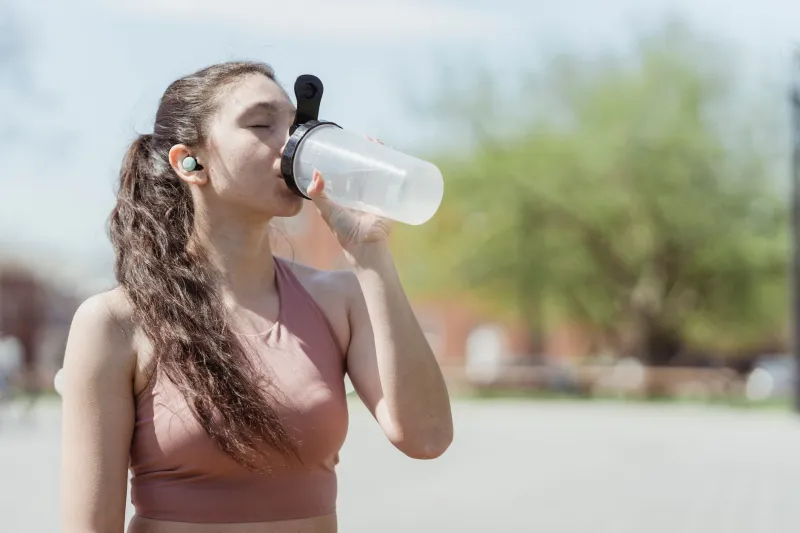
Bottled water introduces an additional and often underappreciated contamination pathway: the packaging itself. Research published in peer-reviewed environmental science journals, including a widely cited 2018 study that analyzed 259 bottled water products from eleven brands across nine countries, found an average of 325 microplastic particles per liter. Particles were identified as consistent with polypropylene — the material used in bottle caps — as well as nylon and polyethylene terephthalate, the resin from which most plastic bottles are manufactured. Heat, mechanical stress during transport, and prolonged storage all appear to accelerate particle shedding from the container into the water itself.
Bottled Water: The Purity Illusion
The bottled water industry in the United States is a multi-billion-dollar market built substantially on the perception of superior purity. Labels featuring mountain springs and pristine glaciers have been extraordinarily effective at communicating cleanliness. The regulatory reality, however, is more nuanced.
The Food and Drug Administration regulates bottled water as a packaged food product. The EPA regulates municipal tap water. While both frameworks establish standards for microbial and chemical safety, neither currently mandates testing for microplastics. This means that a bottled water product can pass all required quality checks while containing microplastic concentrations that would alarm a consumer who understood the source.
A significant percentage of bottled water sold in the US is, by the FDA's own classification, purified municipal water — meaning it originates from the same tap water infrastructure it is often implicitly positioned as superior to. It is then processed through filtration, typically reverse osmosis or distillation, before being packaged. The filtration step can reduce microplastic content, but the subsequent introduction of plastic packaging recontaminates the product before it reaches the consumer.
What the Research Is Telling Us About Health Effects
The health implications of microplastic ingestion remain an active area of scientific investigation, and intellectual honesty requires acknowledging that definitive causal conclusions in humans are not yet fully established. However, the trajectory of the evidence is notable.
Studies in cell cultures and animal models have associated microplastic exposure with oxidative stress, inflammatory responses, and disruption of endocrine signaling. A 2022 study in the journal Environment International detected microplastics in human blood samples from 77 percent of participants. Subsequent research has found particles in lung tissue, placenta samples, and stool. The mere presence of microplastics in these tissues does not confirm harm, but it does confirm systemic uptake — meaning these particles are not simply passing through the digestive tract without interaction.
Particularly concerning to researchers is the chemical dimension. Plastics are not inert; they are manufactured with stabilizers, plasticizers, flame retardants, and colorants, many of which are known endocrine disruptors. Microplastic particles can also adsorb environmental contaminants — pesticides, heavy metals, pharmaceutical residues — effectively functioning as concentrated delivery vehicles for multiple classes of pollutants.
How Filtration Technology Addresses the Microplastic Challenge
For households seeking to meaningfully reduce microplastic exposure through their drinking water, the comparison between bottled water and filtered tap water increasingly favors the latter — provided the filtration technology is appropriately selected.
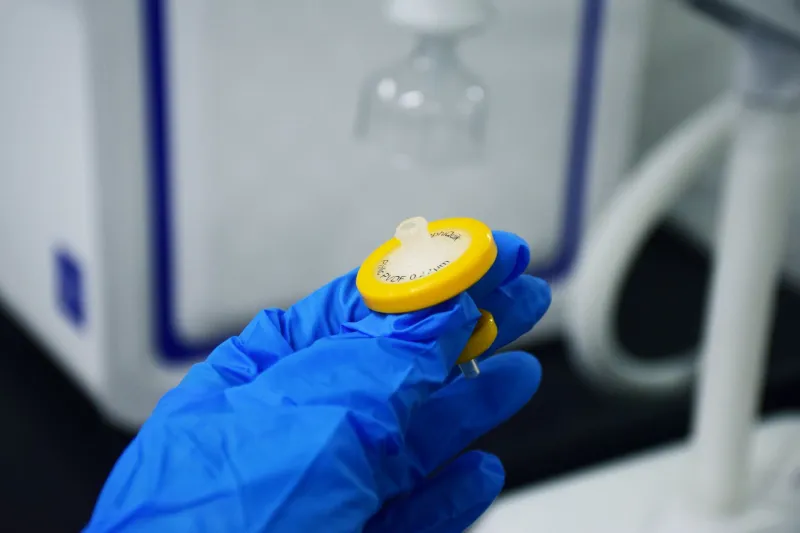
Not all filters are equivalent. Standard pitcher-style carbon filters improve taste and reduce certain chemical contaminants but are not specifically engineered to capture microplastics across the full size range. Reverse osmosis systems, by contrast, force water through a semi-permeable membrane with pores small enough to exclude particles far smaller than the finest microplastics. Studies evaluating RO systems have documented removal rates above 99 percent for microplastic particles, making them among the most effective available technologies for this specific threat.
Multi-stage filtration systems that combine sediment pre-filtration, activated carbon treatment, and reverse osmosis provide layered protection — addressing not only microplastics but also chlorine byproducts, heavy metals, pharmaceutical traces, and other contaminants that co-occur in municipal water supplies.
Critically, a filtered tap water system delivers purified water without reintroducing plastic packaging as a contamination vector. The water travels from the filter directly into a glass or stainless steel vessel, bypassing the entire category of packaging-derived microplastic exposure that undermines bottled water's purity claims.
Making an Informed Choice
Consumers navigating the bottled versus filtered tap water question deserve clarity rather than marketing language. The evidence available today suggests that premium bottled water does not reliably deliver lower microplastic concentrations than well-filtered tap water, and in many cases delivers more. It also generates approximately 50 billion plastic bottles annually in the US alone — a disposal burden with its own environmental and public health implications as those bottles degrade into the microplastics that eventually re-enter the water cycle.
Investing in a home filtration system with verified microplastic removal capability addresses the contamination at the point of consumption, eliminates packaging as a secondary source, and provides ongoing water quality improvement at a fraction of the long-term cost of bottled water.
At ActivPure, the commitment to science-backed water purity means examining the full picture — not just the contaminants that regulations currently track, but the emerging threats that rigorous research is beginning to define. Microplastics represent exactly that category: a modern challenge that demands modern solutions.