What's Growing in Your Coffee Maker: The Biofilm Problem That May Be Undermining Your Gut Health
Most Americans give considerable thought to what goes into their morning coffee—the origin of the beans, the grind size, the water temperature. Far fewer think about the water system delivering that liquid to their cup. Yet inside the reservoirs, tubing, and heating elements of everyday appliances, a microbial process unfolds quietly and consistently, one that has drawn increasing attention from researchers studying the intersection of water quality and human health.
The subject is biofilm: a self-organized community of microorganisms that attaches to surfaces in contact with water, secretes a protective matrix, and resists both physical flushing and standard chemical disinfection. It is not a niche laboratory concern. Biofilm is, in fact, one of the most prevalent forms of microbial life on earth—and your kitchen appliances are among its preferred habitats.
What Biofilm Actually Is—and Why It Persists
To understand why biofilm is difficult to eliminate, it helps to understand what makes it structurally distinct from free-floating bacteria. When microorganisms encounter a surface in an aqueous environment, they do not simply rest there passively. They anchor themselves, begin communicating through chemical signals in a process called quorum sensing, and collectively produce an extracellular matrix composed of polysaccharides, proteins, and DNA. This matrix is not incidental—it is a deliberate survival architecture.
Within that matrix, bacteria are substantially more resistant to antimicrobial agents than their planktonic counterparts. Studies published in environmental microbiology journals have documented resistance increases of anywhere from 10 to 1,000 times compared to free-floating cells. Standard water treatment processes—including municipal chlorination—reduce planktonic bacteria effectively but do not fully penetrate established biofilm communities.
Once formed, biofilm does not remain static. It periodically releases cells back into the water flowing through a system. Those cells are then ingested by the household members drinking from or using that appliance.
The Appliances Most at Risk
Not all water-contact surfaces are equally hospitable to biofilm. The risk is highest where water sits stagnant between uses, where temperatures are warm but not hot enough to be bactericidal, and where surfaces are difficult to access for manual cleaning.
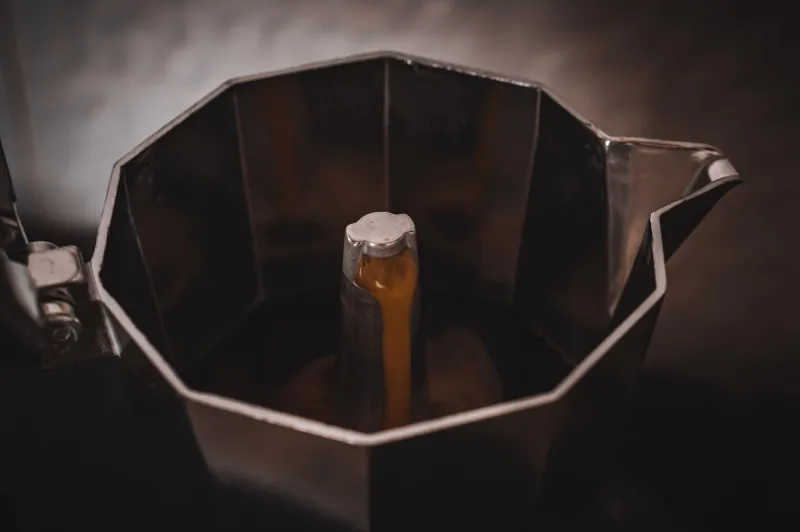
Coffee makers rank among the most consistently cited household appliances in biofilm research. A study conducted by NSF International found that coffee maker reservoirs were among the germiest spots in the American home, with coliform bacteria detected in a substantial percentage of sampled machines. The combination of residual moisture, organic material from coffee grounds, and irregular cleaning cycles creates near-ideal conditions for microbial colonization.
Refrigerator water dispensers and ice makers present a different but related challenge. The internal water lines running through refrigerator doors are rarely cleaned, and the cool but non-freezing temperatures within those lines allow slow but sustained biofilm development. Ice, contrary to intuition, does not kill bacteria—it preserves them.
Countertop and console humidifiers add an airborne dimension to the problem. When a humidifier disperses water droplets containing biofilm-derived bacteria or their byproducts into the air, exposure occurs not just through ingestion but through inhalation—a pathway with its own set of respiratory and immunological implications.
Filtered water pitchers, including popular gravity-fed models, have also been documented as biofilm formation sites, particularly when filters are not replaced on the manufacturer's recommended schedule or when pitchers are stored in warm environments.
The Gut Connection: What the Research Suggests
The human gastrointestinal tract is not a passive recipient of whatever passes through it. It is a highly regulated immunological environment populated by trillions of microorganisms collectively known as the gut microbiome. The composition of that microbiome influences digestion, nutrient absorption, inflammatory signaling, and immune responsiveness in ways researchers are only beginning to fully characterize.
Introducing exogenous bacterial communities—particularly those carrying opportunistic pathogens—into that environment through repeated daily consumption is not without consequence. While healthy adults with intact immune systems may not experience acute illness from low-level biofilm exposure, subclinical disruption of the gut microbiome is a more nuanced concern.
Research published in journals including Gut Microbes and Frontiers in Cellular and Infection Microbiology has explored how chronic low-dose exposure to environmental bacteria influences microbiome diversity and stability. The findings are not alarmist, but they do suggest that the cumulative microbial load entering the gut through water and food-contact surfaces is a variable worth managing deliberately.
For individuals with compromised immune function, inflammatory bowel conditions, or heightened sensitivity to microbial disruption, the calculus becomes more pressing. Immunocompromised individuals—including those undergoing chemotherapy, living with autoimmune conditions, or recovering from surgery—face meaningfully elevated risk from waterborne opportunistic pathogens such as Pseudomonas aeruginosa and Legionella pneumophila, both of which are documented biofilm inhabitants.
Practical Strategies Grounded in Science
The goal is not to induce anxiety about everyday appliances but to encourage a maintenance standard that matches what the science actually supports. The following practices represent a reasonable, evidence-informed approach.
Establish a cleaning schedule and adhere to it. Coffee maker manufacturers typically recommend descaling and reservoir cleaning every one to three months, yet surveys consistently find that most Americans clean their machines far less frequently. Descaling with a dilute white vinegar solution or a manufacturer-approved descaler disrupts biofilm structure and removes mineral deposits that provide additional surface area for microbial attachment.
Dry reservoirs between uses. Moisture is the primary enabling condition for biofilm. After brewing, emptying and air-drying the coffee maker reservoir before the next use reduces the window of opportunity for colonization. This single habit has measurable impact on microbial load over time.
Replace filters on schedule—or sooner. Filtration media in pitchers, refrigerator systems, and countertop units does not remain inert. As filters age, they can become sources rather than barriers, harboring bacteria that pass into the filtered water. Tracking replacement dates and treating them as non-negotiable is a foundational practice.
Address the water quality upstream. Biofilm formation is influenced not just by appliance maintenance but by the quality of the water entering the system. Water high in organic material, sediment, or residual biological content provides greater nutritional substrate for microbial communities. Investing in a point-of-use or whole-home water purification system that reduces biological load before water reaches household appliances is among the most structurally sound interventions available.
Inspect and replace water lines periodically. Refrigerator water lines, in particular, are often overlooked for years. If discoloration, sliminess, or unusual taste or odor from a dispenser is present, the internal line should be inspected and replaced. This is a straightforward maintenance task that most appliance repair services can complete quickly.
Rethinking the Daily Ritual
The morning cup of coffee is, for millions of Americans, a ritual that carries meaning beyond caffeine. It is a moment of comfort, routine, and transition. The same is true of the glass of filtered water from the refrigerator door, the humidified bedroom air that supports a good night's sleep, and the evening cup of herbal tea.
None of these rituals need be compromised. But they deserve the same scrutiny that health-conscious individuals apply to food sourcing, supplement selection, and exercise habits. The water flowing through the systems that support daily life is not a static, neutral medium. It is a dynamic environment shaped by the quality of its source, the condition of the infrastructure it passes through, and the maintenance habits of the household it serves.
Science does not demand perfection in this domain—it asks for informed awareness and consistent, proportionate action. The appliances on your counter and in your refrigerator are worth that attention.