What Your Washing Machine Is Doing to Your Skin: The Water Quality Factor No One Talks About
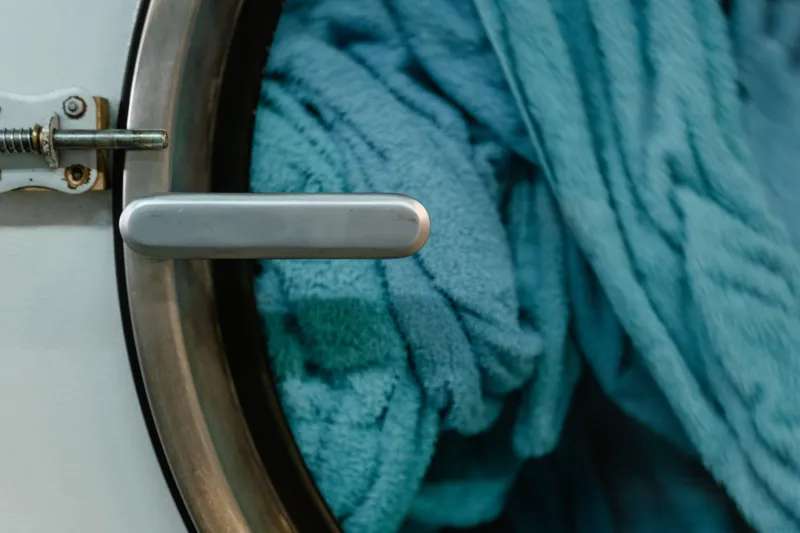
When a rash appears after wearing a freshly laundered shirt, the instinct is to blame the detergent. When towels begin to feel rough and scratchy after a few months of regular washing, the assumption is that they are simply aging. Both conclusions are reasonable — and both are frequently wrong. Across millions of American households, the more accurate culprit sits quietly inside the pipes: the water itself.
Tap water is not a neutral medium. Depending on where you live, it carries a chemical profile that interacts with your fabrics, your detergent, and ultimately your skin in ways that are well-documented in dermatological and materials science literature. Yet this connection remains largely invisible in the mainstream conversation about laundry and skin health.
Hard Water and the Mineral Residue Left Behind
Approximately 85 percent of U.S. homes receive hard water — water with elevated concentrations of dissolved calcium and magnesium. These minerals are not harmful to drink in typical quantities, but they behave very differently when they enter a washing machine.
During a wash cycle, calcium and magnesium ions bind to the surfactant molecules in laundry detergent, forming insoluble compounds sometimes referred to as soap scum. This reaction has two significant consequences. First, it dramatically reduces detergent effectiveness, meaning clothes emerge less thoroughly cleaned than the label on the detergent bottle would suggest. Second — and more critically for skin health — these mineral-detergent compounds do not rinse away cleanly. They remain embedded in fabric fibers.
Research published in the Journal of Investigative Dermatology found that residual sodium lauryl sulfate left in fabrics after washing in hard water was associated with measurable skin barrier disruption in study participants. The fabric itself, in other words, becomes a slow-release delivery system for irritating compounds that would otherwise have rinsed away in softer water conditions.
For individuals with eczema, psoriasis, or simply sensitive skin, this mechanism may explain why symptoms persist despite careful product selection. The detergent chosen is irrelevant if the water is preventing it from rinsing out properly.
Chlorine: The Disinfectant That Keeps Working After the Wash
Municipal water treatment relies on chlorine and chloramine to neutralize pathogens before water reaches your home. This is an important public health measure. However, residual disinfectants do not disappear when water enters your laundry room.
Chlorine is a known oxidizing agent. In a washing machine, it interacts with fabric dyes, weakening color vibrancy over time and contributing to the faded, worn appearance that many people attribute to normal use. More importantly, chlorine can degrade the structural integrity of natural fibers such as cotton and linen, shortening their functional lifespan considerably.
On the skin side, chlorine residue in clothing has been associated with contact dermatitis in sensitive individuals. The compound reacts with organic matter — including sweat and skin oils — to form chlorinated byproducts that can act as irritants on prolonged skin contact. For people who wear garments for extended periods, such as athletes in performance wear or workers in uniforms, this is a non-trivial concern.
The Problem With 'Clean' Clothes That Aren't Really Clean
Perhaps the most counterintuitive aspect of this issue is the gap between the appearance of cleanliness and actual cleanliness. Clothes that emerge from the wash smelling fresh and looking spotless may still carry a chemical burden that becomes biologically active against the skin.
Hard water mineral deposits trap particulates within fabric weaves, creating microscopic reservoirs where bacteria can persist even after a full wash cycle. Studies examining textile hygiene have found that hard water conditions correlate with higher residual bacterial counts on laundered fabrics compared to equivalent washes conducted in soft water. This matters particularly for items like gym wear, underwear, and bed linens — textiles with consistent, prolonged skin contact.
Additionally, the coarsening of fabric texture caused by mineral buildup is not merely a comfort issue. Rougher fibers create more friction against the skin surface, which over time can compromise the outermost layer of the skin barrier. For individuals with already-compromised skin conditions, this mechanical irritation compounds chemical irritation to produce outcomes that seem disproportionate to the cause.
Trace Contaminants and the Broader Picture
Beyond hardness minerals and chlorine, tap water in various parts of the United States contains trace levels of heavy metals, agricultural runoff compounds, and pharmaceutical residues. While the concentrations of these substances are typically too low to pose acute health risks through drinking, their behavior in a hot wash cycle — where concentration and chemical reactivity are both elevated — is less thoroughly studied.
Lead and copper, which can enter water supplies through aging plumbing infrastructure, have the potential to interact with fabric fibers and detergent compounds in ways that are not yet fully characterized. What is known is that the chemistry of a laundry wash is not simple, and the assumption that water is merely a passive carrier in the process is not scientifically defensible.
Practical Considerations for Better Laundry Outcomes
Understanding the problem is the foundation of addressing it. For households in hard water regions — a category that includes large portions of the Midwest, Southwest, and Mid-Atlantic states — several approaches can meaningfully improve both fabric longevity and skin outcomes.
Whole-home or point-of-use water filtration and conditioning systems represent the most comprehensive solution. By reducing mineral content and removing residual chlorine before water reaches the washing machine, these systems change the fundamental chemistry of the laundry process. Detergents perform as intended, rinse cycles clear more completely, and fabrics retain their structural integrity for longer.
For those not yet ready to address water quality at the source, adjustments such as using liquid detergents over powders (which tend to leave more residue in hard water), adding a water conditioner to the wash cycle, and running an extra rinse can partially offset the effects of problematic water. However, these are mitigating measures rather than solutions to the underlying issue.
It is also worth examining the water temperature used for washing. Hot water accelerates the chemical reactions between chlorine, minerals, and fabric fibers. Where fabric care instructions permit, cooler wash temperatures reduce the rate at which these reactions occur, extending the useful life of clothing and potentially reducing the concentration of irritating compounds deposited in the fabric.
A More Complete Definition of Clean
The laundry room occupies an unusual position in home health: it is the place where we process the items most intimately connected to our bodies, yet it is rarely considered through a health lens. Clean clothes are assumed to be the straightforward output of detergent plus water plus machine. The science suggests a more complicated reality.
Water quality is a variable that shapes outcomes at every point in the laundry process — from how effectively detergent cleans to what residues remain in fabric to how those residues interact with skin over hours of contact. Treating water as a passive input, rather than an active chemical participant, means accepting a version of clean that may be less complete than it appears.
For households where unexplained skin irritation, premature fabric wear, or persistent laundering dissatisfaction are ongoing concerns, water quality deserves a place in the diagnostic conversation — not as an afterthought, but as a primary variable.