Your Shower Is Part of Your Skincare Routine Whether You Know It or Not

The average American spends between seven and twelve minutes in the shower each day. Over a lifetime, that adds up to months of sustained, full-body exposure to whatever happens to be dissolved in the municipal water supply. Skincare consumers in the United States collectively spend billions of dollars each year on products designed to hydrate, protect, and restore skin and hair—yet the water those products are applied with, and ultimately rinsed away by, rarely receives the same scrutiny as the products themselves. That oversight may be costing more than people realize.
What Is Actually in Your Shower Water
Municipal water treatment in the United States is among the most regulated in the world. The EPA enforces limits on dozens of contaminants, and treatment facilities work hard to deliver water that is safe to drink. However, "safe to drink" and "optimal for skin and hair health" are not the same standard.
Chlorine is the most consequential variable for most Americans. It is added deliberately as a disinfectant, and it does its job effectively. But chlorine is chemically reactive, and that reactivity does not switch off when it contacts your skin in the shower. Chlorine strips the natural lipid barrier from the skin's surface—the thin film of sebum and ceramides that retains moisture and keeps environmental irritants out. Dermatologists refer to this protective layer as the skin barrier, and its integrity is central to how young, resilient, and hydrated skin appears and functions.
Beyond chlorine, many municipal systems also contain chloramines—compounds formed when chlorine reacts with naturally occurring ammonia—which are used as an alternative or supplemental disinfectant. Chloramines are more stable than free chlorine and more difficult to remove, and emerging research suggests they may be similarly disruptive to skin barrier function.
Hard Water and the Mineral Accumulation Problem
Approximately 85 percent of American homes receive hard water—water with elevated concentrations of dissolved calcium and magnesium ions. The US Geological Survey has mapped hard water distribution extensively, and it is particularly prevalent across the Midwest, Southwest, and Southern states.
When hard water evaporates from the skin's surface after a shower, it leaves microscopic mineral deposits behind. These deposits are mildly alkaline, which disrupts the skin's naturally acidic pH (typically between 4.5 and 5.5). Research published in dermatology journals has linked hard water exposure to increased transepidermal water loss—essentially, the skin's diminished ability to retain moisture—and has identified associations between hard water use and eczema flares in predisposed individuals.
For hair, the consequences are similarly well-documented. Calcium and magnesium ions bind to the protein structure of the hair shaft, roughening the cuticle layer and creating the dull, heavy, difficult-to-style texture that many people attribute to product buildup or damage. The same minerals accumulate on the scalp, contributing to dryness, irritation, and in some cases exacerbating conditions like seborrheic dermatitis.
Chlorine, Free Radicals, and the Aging Mechanism
The connection between chlorine exposure and premature skin aging operates through a specific biochemical pathway worth understanding. When chlorine contacts organic matter—including the proteins and lipids that make up skin cells—it generates reactive oxygen species, commonly known as free radicals. Free radicals are unstable molecules that damage cellular structures by stealing electrons from neighboring molecules, initiating a chain reaction of oxidative stress.
Collagen and elastin, the structural proteins responsible for skin's firmness and elasticity, are particularly vulnerable to oxidative damage. This is the same mechanism by which UV radiation from the sun accelerates aging—daily chlorine exposure during showering creates a lower-level but chronically repeated version of the same oxidative insult. The cumulative effect over years and decades is measurable in skin texture, elasticity, and the depth of fine lines.
Antioxidant serums and vitamin C products have become enormously popular precisely because they neutralize free radical activity. The irony is that many of these products are applied to skin that has just been bathed in a free-radical-generating solution, then rinsed off with more of the same.
Hair Color, Texture, and the Chemistry of Oxidation
For individuals who color their hair, chlorine presents an additional and more immediately visible problem. Chlorine is an oxidizing agent, and it interacts with both natural melanin and synthetic hair color molecules. This is why colored hair fades faster in hard or chlorinated water, and why blonde or light-colored hair can take on unwanted warm or brassy tones after extended exposure. The structural oxidation that dulls color also contributes to the brittle, porous texture that makes colored hair feel compromised.
Sulfates in shampoo are frequently blamed for color fading, and they play a role—but the water itself is often the more significant variable that goes unaddressed.
What Filtration at the Showerhead Can and Cannot Do
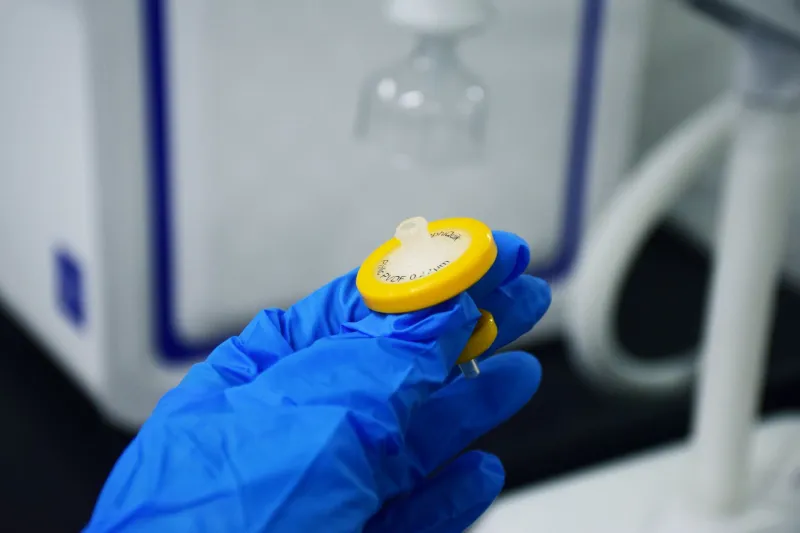
The practical solution for most households begins with point-of-use filtration at the showerhead. Activated carbon filters are effective at reducing free chlorine and some chloramines, improving both the chemical profile of the water and its sensory qualities—many users notice a difference in how their skin feels within days of installation. KDF (kinetic degradation fluxion) media, often combined with carbon in higher-end shower filters, addresses a broader spectrum of contaminants including heavy metals such as lead and iron that can contribute to oxidative stress.
Hard water mineral reduction requires a different approach. Whole-house water softening systems use ion exchange to replace calcium and magnesium ions with sodium ions, effectively eliminating hardness at every tap and showerhead in the home. For renters or those not ready to invest in whole-house treatment, certain showerhead filters incorporate scale-inhibiting technology that modifies mineral crystal structure without removing minerals entirely, reducing their tendency to deposit on skin and hair.
Reframing the Wellness Routine
The wellness industry has done an excellent job of educating consumers about what they put on their skin. The conversation about what their skin is exposed to during the most basic daily hygiene ritual is long overdue. For individuals who track macronutrients, choose organic produce, and invest in blue-light-blocking glasses, the logical next question is: what is my water actually doing to my body at the cellular level?
The answer, informed by dermatological research and water chemistry, is that unfiltered tap water is actively working against the outcomes that skincare and hair care products are designed to deliver. Addressing water quality at the point of use is not a luxury upgrade—it is a foundational step in any serious wellness routine, one that makes everything applied before and after the shower work more effectively and more durably over time.